
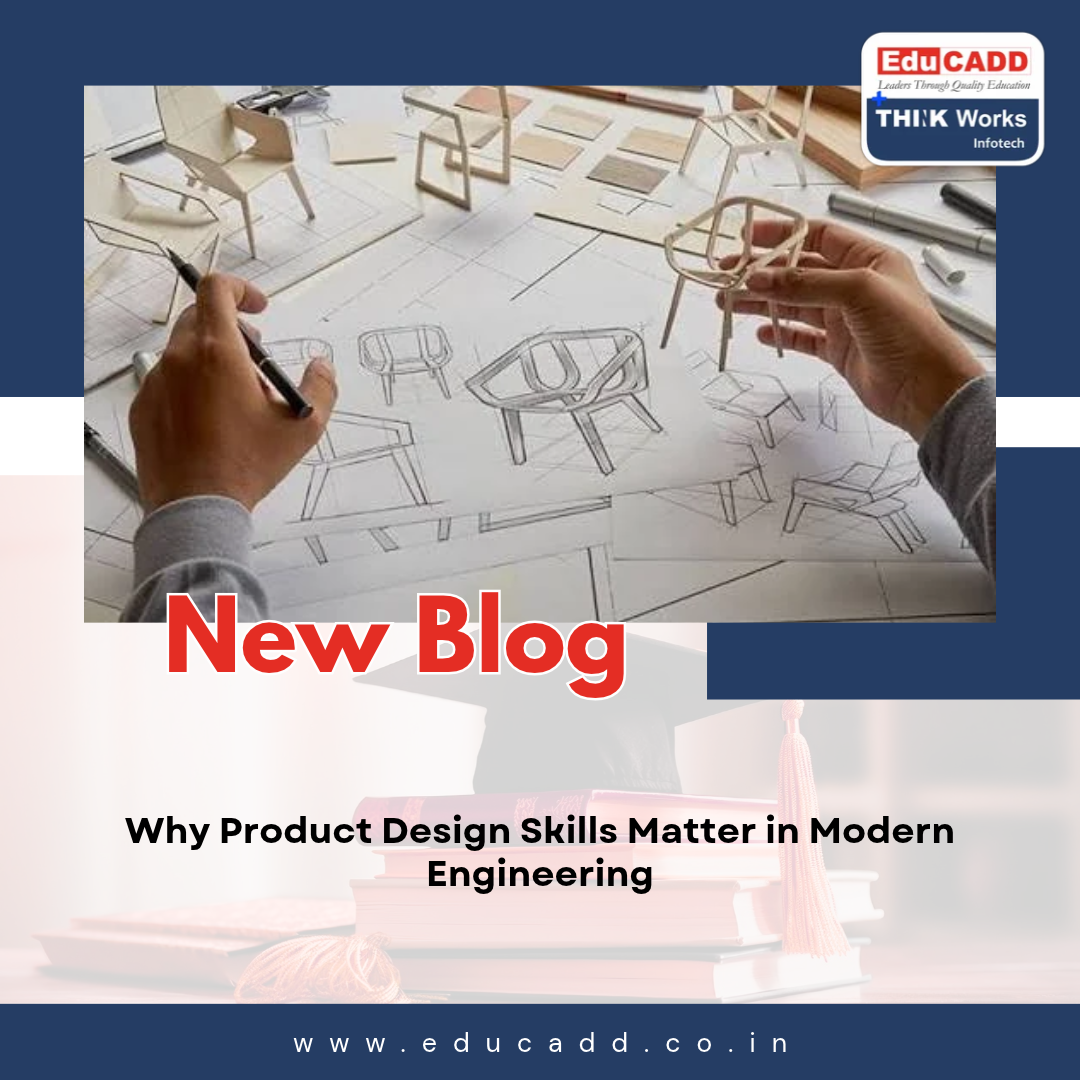
Introduction: Turning Creative Ideas into Innovative Products
Every product we use begins with an idea. From automobiles and mobile phones to industrial machines and household equipment, engineers transform concepts into useful products. However, creating a successful product requires more than creativity. It demands technical knowledge, accurate modeling, design planning, and an understanding of manufacturing processes.
This is why Product Design plays an important role in modern engineering. It connects creative thinking with technical expertise to develop products that meet specific requirements. Engineers use advanced computer-aided design tools to prepare drawings, build 3D models, test design concepts, and improve product performance.
Today, industries need professionals who can work confidently with modern design software. Learning professional Product Design skills can help engineering students, graduates, and working professionals prepare for opportunities in automotive, aerospace, manufacturing, and industrial design.
Therefore, developing the right technical skills is an important step towards building a successful engineering career.
What Is Product Design in Modern Engineering?
Product Design is the process of developing a product from its initial concept to a detailed design that supports manufacturing and practical use. It involves understanding customer needs, selecting materials, preparing technical drawings, creating models, and refining the final design.
For example, developing a new automotive component requires engineers to consider its shape, dimensions, strength, material, weight, and manufacturing method.
Similarly, designing an industrial machine requires careful planning of individual components and their assembly.
Modern engineers use CAD software to complete these activities with greater accuracy. These tools allow designers to create digital models, modify dimensions, examine assemblies, and prepare technical documentation.
The main stages of the product development process include:
- Identifying the product requirement.
- Researching existing designs and solutions.
- Preparing initial sketches and concepts.
- Developing 2D engineering drawings.
- Creating detailed 3D models.
- Designing assemblies and components.
- Reviewing design accuracy and feasibility.
- Preparing technical drawings for manufacturing.
- Improving the design based on testing and feedback.
Each stage contributes to the quality and functionality of the final product.
Why Product Design Skills Matter in Today’s Industries
Manufacturing industries constantly work to improve product quality, production efficiency, and customer satisfaction. They need engineers who understand how to convert design requirements into practical solutions.
As a result, Product Design Engineering has become an important area of technical development.
Better Accuracy in Engineering Design
Accurate dimensions and technical drawings are essential for manufacturing. Even small design errors can affect component fitting and product performance.
CAD applications help engineers prepare detailed drawings and maintain accurate measurements. They can also modify designs without recreating the entire drawing.
This improves the design process and supports better documentation.
Faster Product Development
Modern CAD tools help engineers create and modify digital models efficiently. Designers can test different concepts, review component shapes, and make improvements before production.
Consequently, teams can explore more design possibilities during the development process.
Improved Product Visualization
3D modeling helps engineers understand how a component or product will look before manufacturing begins.
Designers can rotate models, examine different views, and review assemblies. This makes it easier to identify design limitations and communicate ideas.
Better Manufacturing Preparation
Product designers must understand how their designs will translate into physical components.
Technical drawings, dimensions, tolerances, and assembly details help manufacturing teams understand design requirements.
Therefore, strong Mechanical Product Design skills support communication between design and production departments.
Important Software Used in Professional Product Design
Software knowledge is a key part of modern engineering design. Different applications support different stages of the product development process.
A professional Product Design Course should introduce learners to industry-relevant tools and practical design methods.
AutoCAD for Engineering Drawings
AutoCAD is widely used for preparing accurate 2D technical drawings. It helps mechanical engineers create component drawings, dimensions, layouts, and manufacturing documentation.
Learners can develop skills in:
- Creating 2D engineering drawings.
- Using drawing and modification tools.
- Managing layers and drawing properties.
- Applying dimensions and tolerances.
- Preparing technical documentation.
- Understanding basic 3D modeling.
AutoCAD provides an important foundation for learners who want to develop their engineering drawing skills.
Creo for Parametric Product Modeling
Creo is a powerful CAD application used for 3D product design and mechanical engineering. It allows designers to create components using parametric modeling techniques.
Engineers can build parts, modify features, create assemblies, and prepare engineering drawings.
Important learning areas include:
- Sketcher geometry and constraints.
- Feature-based solid modeling.
- Part design and modification.
- Datum planes and reference geometry.
- Assembly design and constraints.
- Sheet metal modeling.
- Surface modeling.
- Engineering drawing creation.
These skills help learners understand how individual components form complete mechanical products.
NX CAD for Advanced Product Development
NX CAD supports advanced engineering design and product development. It offers tools for part modeling, assembly design, sheet metal, surface modeling, and technical documentation.
Professionals use NX CAD in industries that require complex product designs and detailed engineering workflows.
Learners can explore:
- Sketcher and geometric constraints.
- Advanced part modeling.
- Curve and surface creation.
- Assembly modeling.
- Component positioning.
- Sheet metal design.
- Assembly clearance analysis.
- Drafting and drawing views.
- Engineering dimensions and annotations.
Learning NX CAD can help engineers develop advanced digital design capabilities.
Understanding the Complete Product Development Process
A successful product requires a structured development approach. Engineers must understand the relationship between design requirements, component functionality, and manufacturing methods.
Let’s explore the major stages.
Concept Development and Research
The first stage involves understanding what the product should achieve. Designers study customer requirements, product functionality, existing solutions, and possible improvements.
For example, an engineer designing a lightweight machine component must understand its operating conditions and expected performance.
This research provides direction for the design process.
2D Drafting and Technical Documentation
After selecting a suitable concept, engineers prepare technical drawings. These drawings communicate dimensions, shapes, tolerances, and other manufacturing details.
AutoCAD helps designers create accurate drawings and organize technical information.
3D Modeling and Component Design
The next stage involves creating digital models. Engineers develop individual components using CAD applications such as Creo and NX CAD.
They can modify dimensions, add features, and examine the component from different angles.
Moreover, parametric modeling allows designers to update features when design requirements change.
Assembly Design and Verification
Most products contain multiple components. Engineers must understand how these parts connect and function together.
Assembly modeling helps designers position components, apply constraints, and examine the overall structure.
It also supports the identification of possible fitting or clearance issues.
Design Review and Manufacturing Preparation
Before production, engineers review the final design. They check dimensions, assembly relationships, and technical documentation.
The team may also review manufacturing requirements and identify possible design improvements.
This process helps ensure that the final design meets its intended requirements.
Career Opportunities After Learning Product Design
Professional Product Design skills can help learners explore several career opportunities in engineering and manufacturing.
The available roles depend on software proficiency, practical experience, engineering knowledge, and individual career goals.
Some common career options include:
- Product Design Engineer
- Mechanical Design Engineer
- CAD Engineer
- Design and Development Engineer
- 3D Modeling Engineer
- Mechanical CAD Designer
- Product Development Executive
- Manufacturing Design Support Engineer
- R&D Design Technician
- Assembly Design Engineer
These professionals may work with automotive manufacturers, aerospace companies, industrial machinery manufacturers, consumer electronics businesses, and engineering consultancies.
For example, a Mechanical Design Engineer may create machine components and assemblies. A Product Design Engineer may work on product concepts, technical development, and design improvements.
Furthermore, experienced professionals can explore opportunities in specialized design, product development, and research teams.
Why Mechanical Engineering Students Should Learn Product Design
Mechanical engineering students study subjects such as engineering drawing, manufacturing processes, machine design, materials, and mechanics.
However, applying this knowledge through professional software requires practical experience.
Learning Mechanical Product Design helps students connect classroom concepts with real engineering applications.
For example, students can use CAD software to create machine components, develop assemblies, and prepare technical drawings. They can also understand how different design features affect component functionality.
These practical skills can help students:
- Improve their engineering drawing knowledge.
- Develop 3D modeling abilities.
- Understand component and assembly design.
- Build technical project portfolios.
- Improve software proficiency.
- Prepare for design-related job roles.
- Communicate engineering concepts more effectively.
Working professionals can also benefit from advanced CAD knowledge. It can help them expand their responsibilities and explore new areas within mechanical engineering.
How to Choose the Right Product Design Course
Choosing the right Product Design Course requires careful consideration. A good program should combine software training with practical engineering knowledge.
Before enrolling, examine the following factors:
Software coverage: Check whether the course includes AutoCAD, Creo, and NX CAD.
Practical assignments: Look for exercises involving components, assemblies, and engineering drawings.
Industry relevance: Choose a curriculum that reflects common product development workflows.
Trainer experience: Experienced trainers can explain technical concepts and demonstrate practical design methods.
Project exposure: Realistic assignments help learners understand how software skills apply to engineering tasks.
Certification: Review the certificate offered and understand its relevance to your professional goals.
Learning flexibility: Check whether classroom, online, or hybrid training options suit your schedule.
Most importantly, avoid selecting a course based only on the number of software applications. Focus on the quality of training and the practical skills you can develop.
Why Choose EduCADD for Product Design Training?
EduCADD offers professional technical training for students and working professionals who want to develop industry-relevant engineering skills.
Its Master Certificate in Product Design focuses on three important applications: AutoCAD, Creo, and NX CAD.
The program provides 160 hours of hands-on training. It covers technical drafting, parametric modeling, advanced product design, assembly development, and sheet metal modeling.
Learners also work on practical design assignments and case studies connected to manufacturing and automotive applications.
Important program highlights include:
- Comprehensive training in three industry-relevant CAD applications.
- AutoCAD technical drawing and documentation.
- Creo parametric modeling and assembly design.
- NX CAD advanced product modeling.
- Sheet metal and surface modeling concepts.
- Practical design assignments and case studies.
- Classroom, online, and hybrid learning options.
- Career-focused training with expert guidance.
The program is suitable for mechanical engineering students, diploma holders, graduates, and working professionals in manufacturing, research, and development.
Explore the EduCADD Master Certificate in Product Design to learn more about the curriculum and training structure.
How to Build a Strong Product Design Portfolio
A professional portfolio can help demonstrate your practical design abilities to potential employers. Instead of listing only software names on your resume, show examples of what you can create.
Start with simple components and gradually move towards complex assemblies.
Your portfolio can include:
- 2D engineering drawings created using AutoCAD.
- 3D components modeled in Creo.
- Parametric modeling exercises.
- Mechanical assembly projects.
- NX CAD product design examples.
- Sheet metal component designs.
- Detailed engineering drawings.
- Design assignments based on manufacturing applications.
For every project, explain the design objective and your contribution. Mention the software used and describe the main modeling steps.
In addition, maintain clear screenshots, organized files, and readable technical documentation.
A well-structured portfolio can help recruiters understand your technical knowledge and problem-solving approach.
The Future of Product Design and Engineering Technology
The future of engineering design will continue to evolve with digital technologies. Advanced CAD applications, simulation tools, automation, and artificial intelligence are influencing how engineers develop products.
Companies are also exploring new methods to improve product quality, reduce development time, and support sustainable manufacturing.
As a result, engineers must continue updating their technical knowledge.
Skills such as parametric modeling, 3D product development, assembly design, and digital documentation will remain useful across many engineering applications.
Professionals who understand design fundamentals and modern software workflows can adapt more effectively to changing industry requirements.
Therefore, investing in Product Design skills can support long-term professional development.
Conclusion: Turn Your Engineering Knowledge into Career Success
Modern industries need engineers who can combine technical knowledge with creative problem-solving. Product design provides an opportunity to transform ideas into practical solutions through accurate drawings, 3D modeling, and structured development processes.
Learning Product Design software such as AutoCAD, Creo, and NX CAD can help students and professionals strengthen their engineering capabilities. Practical assignments, assembly modeling, and real-world design projects also help learners understand industry workflows.
However, successful career development requires continuous learning and hands-on experience. Build your portfolio, improve your modeling skills, and understand how engineering designs connect with manufacturing requirements.
If you want to explore opportunities in mechanical design, automotive engineering, or product development, start by developing the right skills. With focused learning and practical experience, you can turn your engineering knowledge into valuable professional capabilities.